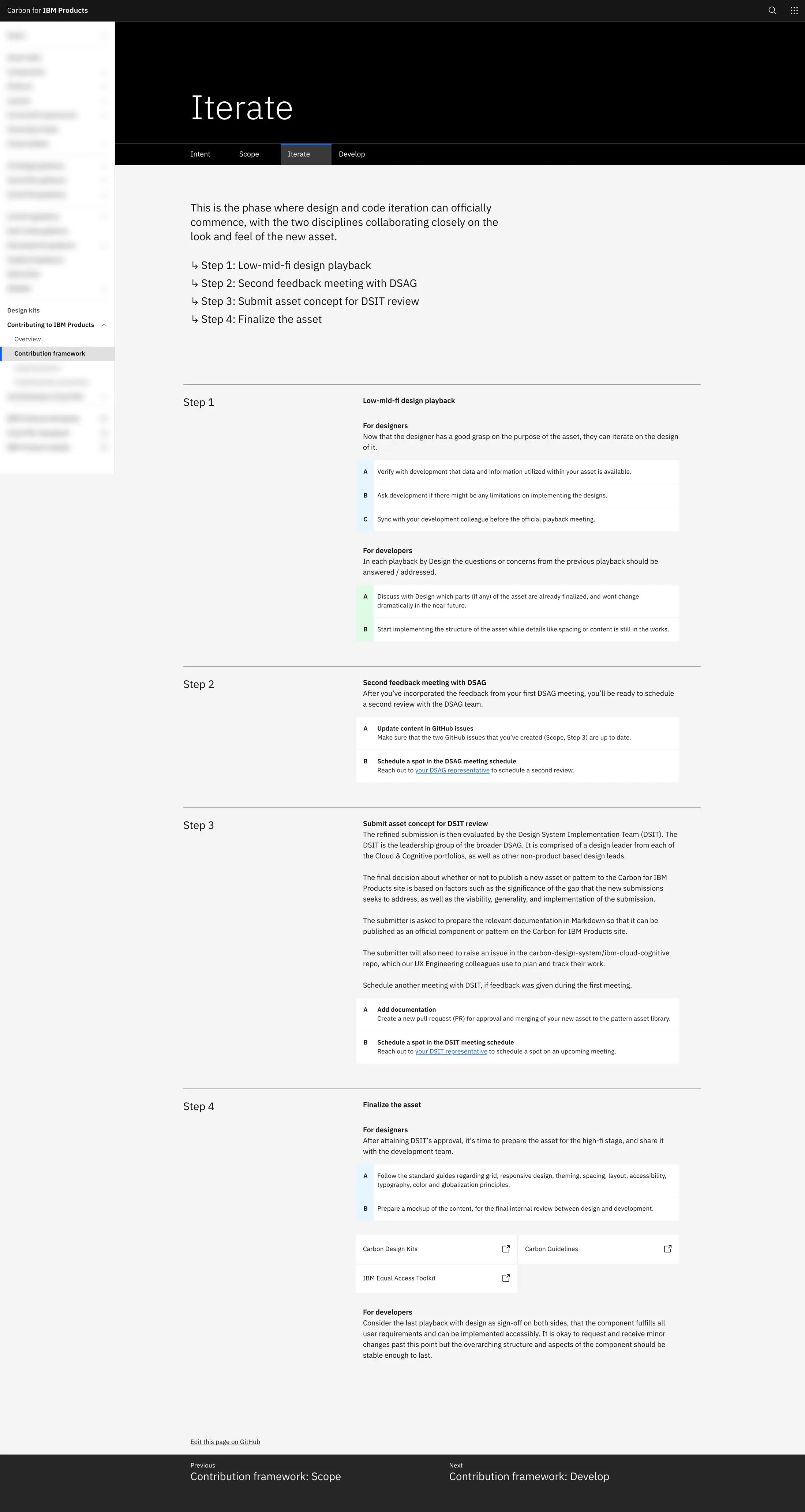
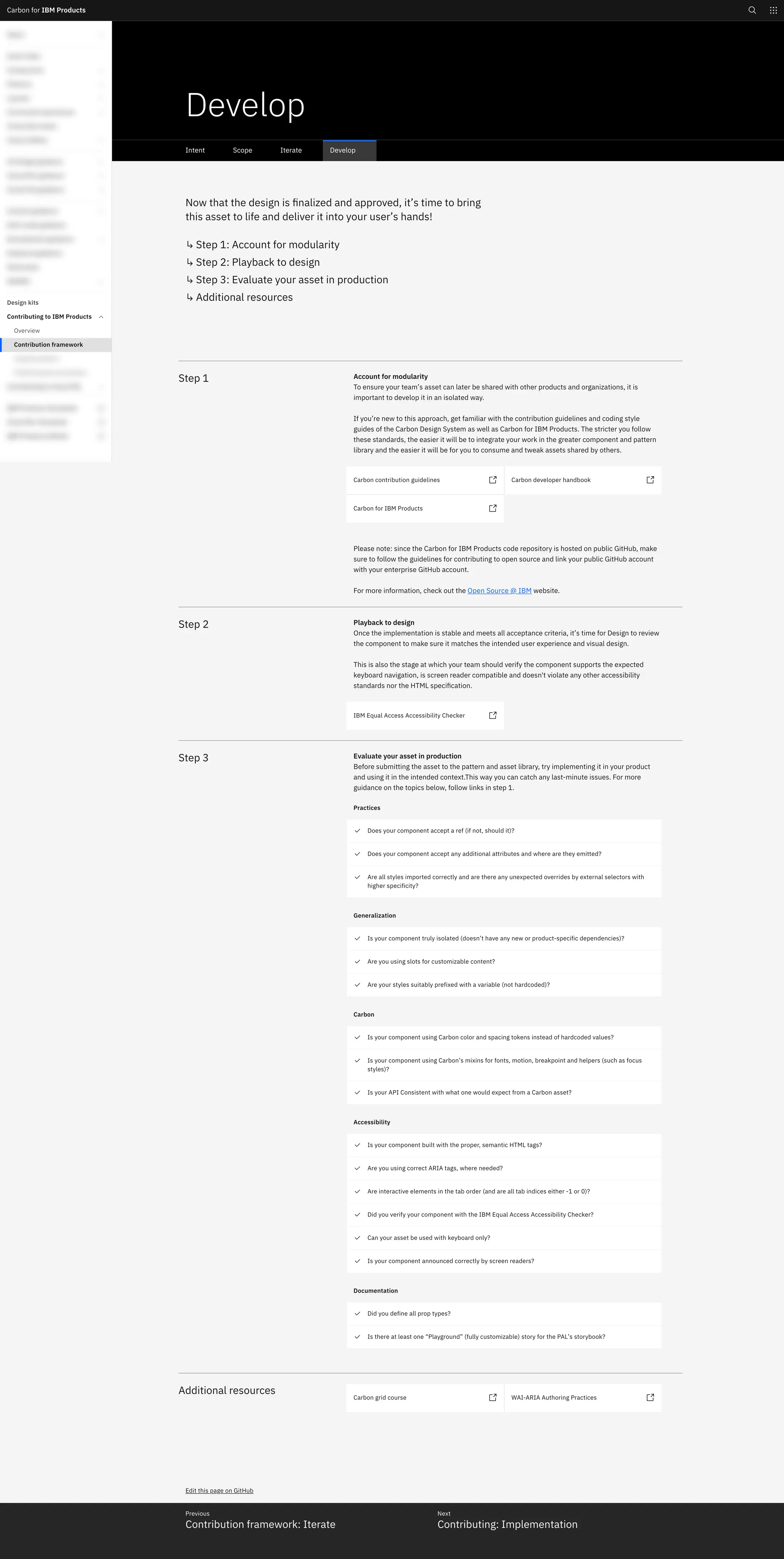
The Contribution Mindset Framework
When contribution isn't the default: creating a shared framework
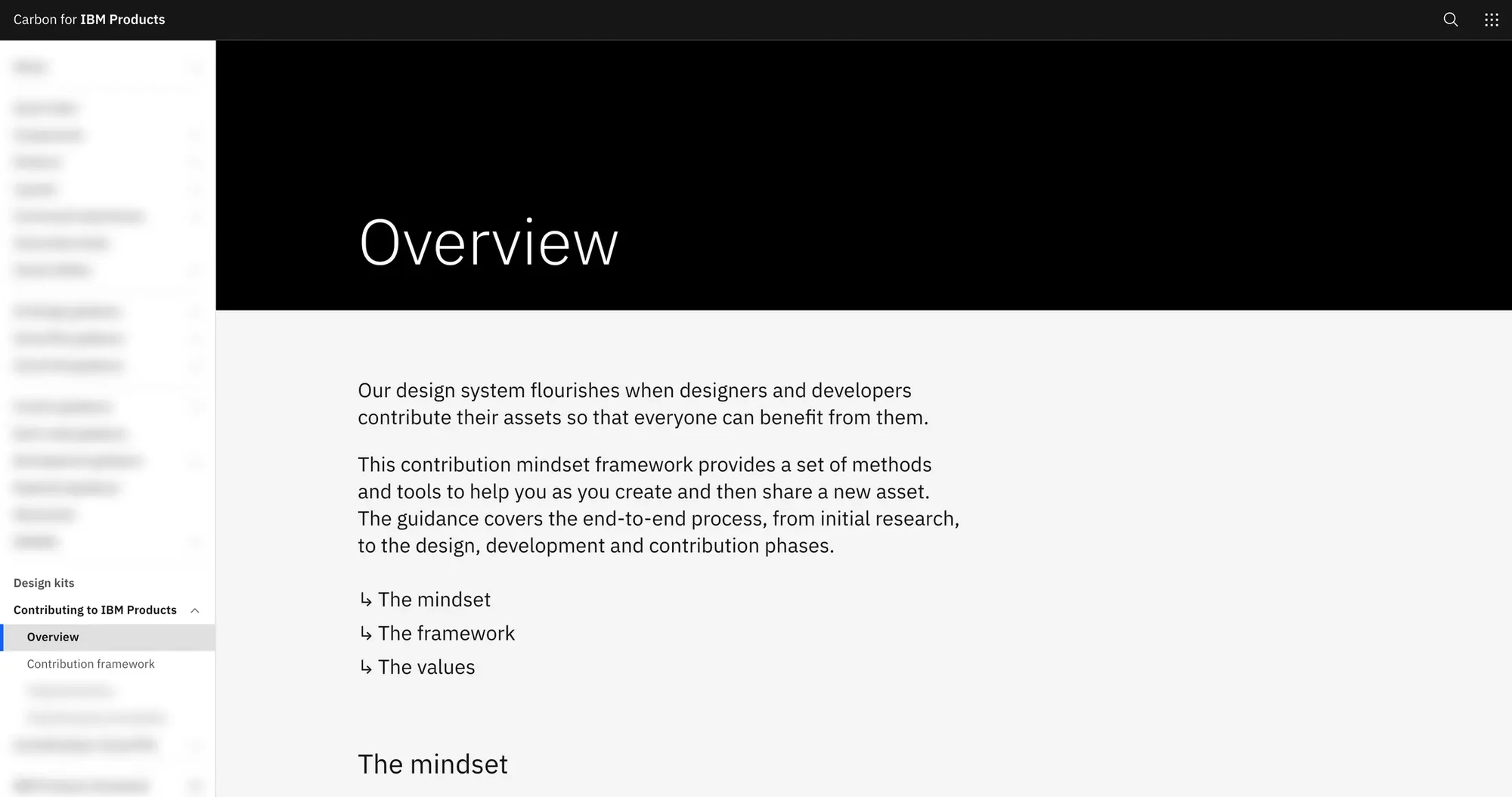
Leading a self-initiated effort to develop the official IBM Products step-by-step guide for creating custom Carbon assets with contribution in mind.
I initiated and led the project, driving the research, facilitation, framework development, stakeholder alignment, and advocacy needed to bring it into practice.
- Role
- Initiative Lead
- TEAM
- Led a team of 2 volunteers
- Scope
- IBM Cloud, IBM Products, Carbon team
3 years · Fully remote - TOOLS AND SETTINGS
- Design thinking, Facilitation
Figma, ChatGPT
Context
One design
foundation across
600+ products
IBM Products brings together more than 600 products, 300+ designers, and 2,000+ developers. While IBM’s Carbon Design System provides the shared design foundation, IBM Products extends it with its own patterns and assets to address common needs across its product portfolio.
The problem
No clear path to custom asset creation and contribution
IBM Products teams needed to extend Carbon to meet their products' needs, but lacked clear guidance on identifying opportunities for reusable assets, creating them in line with Carbon's standards and best practices, and contributing them for broader reuse. Knowledge, governance, and documentation were spread across teams, leaving designers to navigate the process themselves.
Impact
One shared framework for custom asset creation.
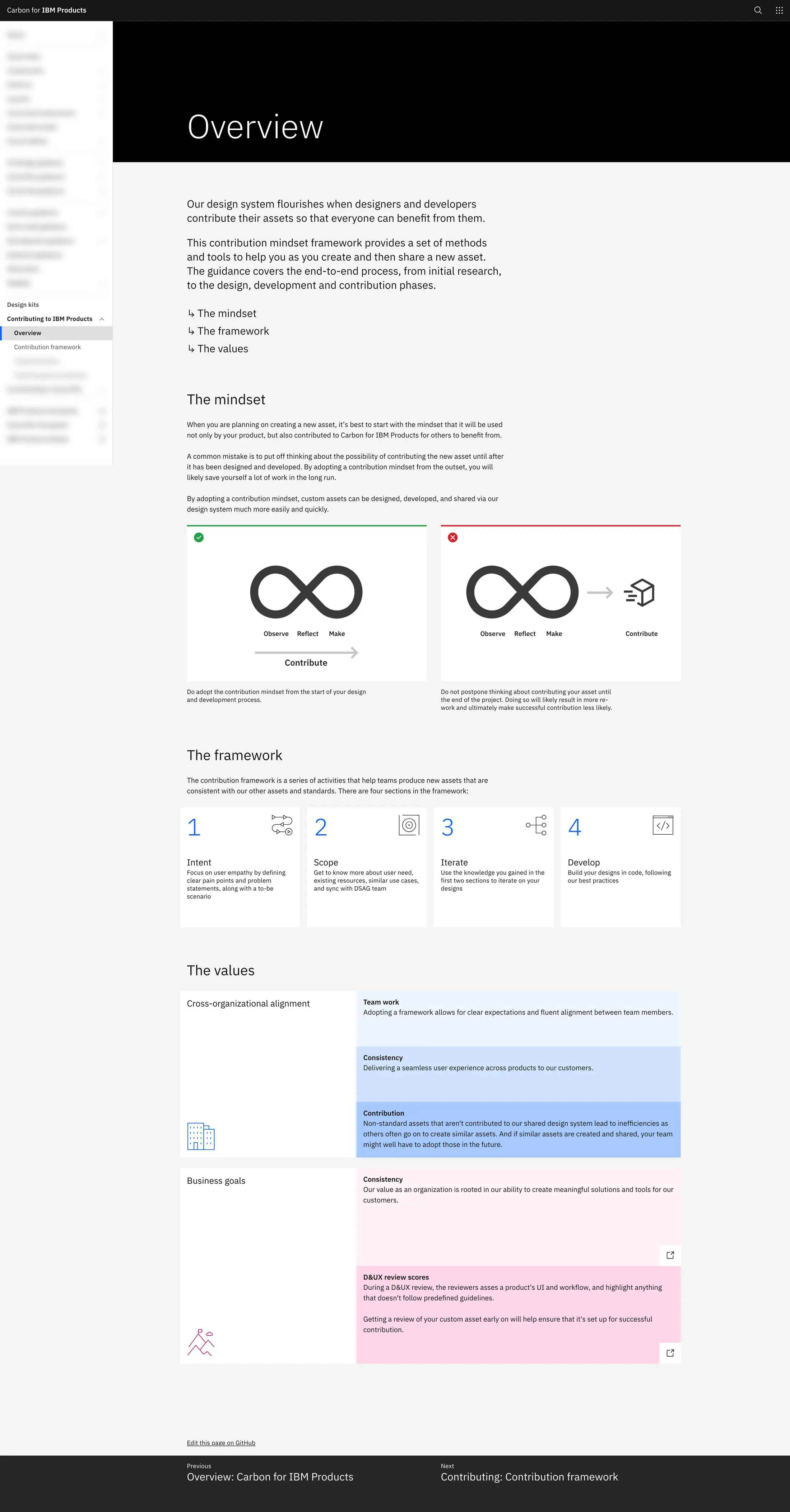
From product-specific solutions to a culture of contribution across IBM Products.
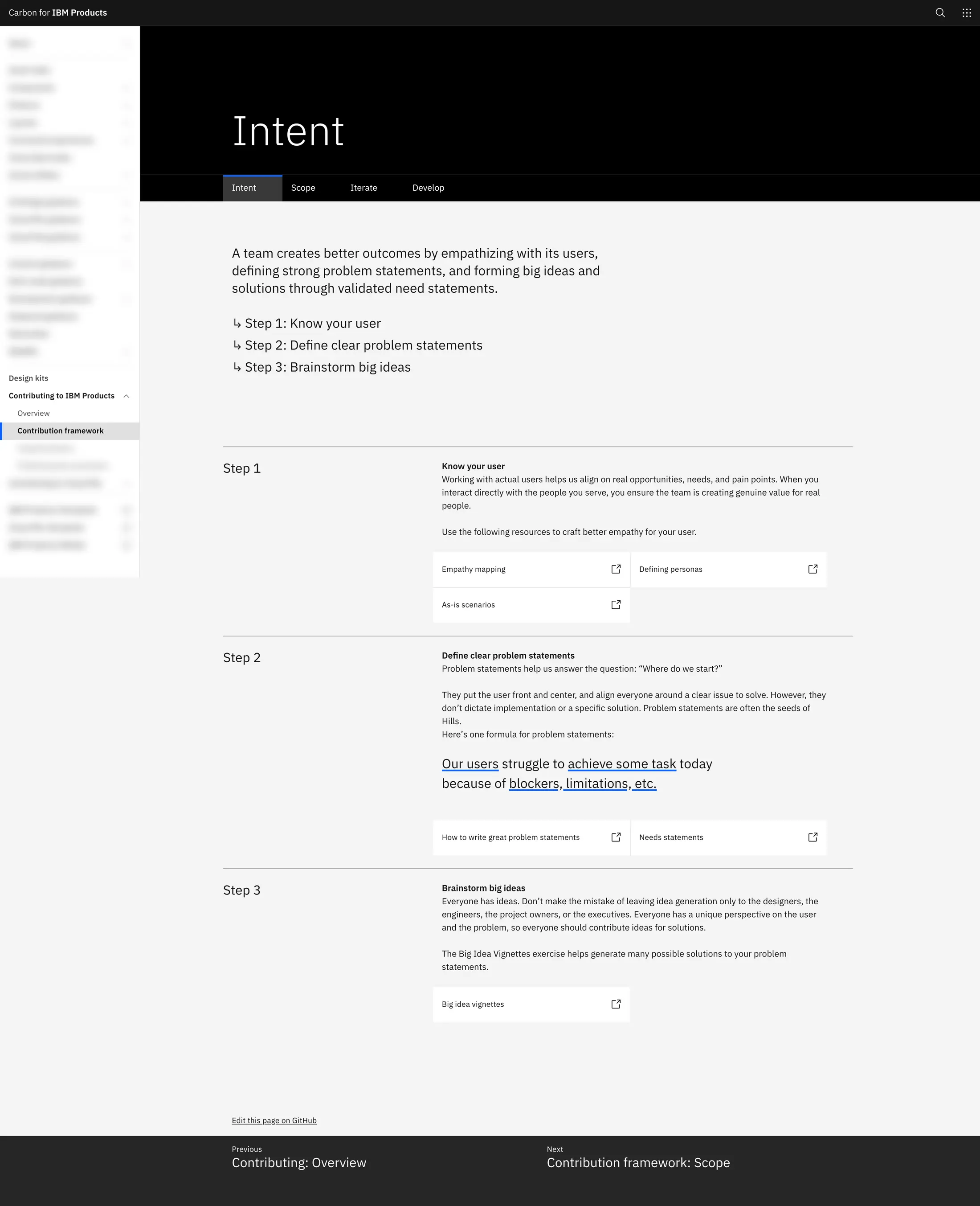
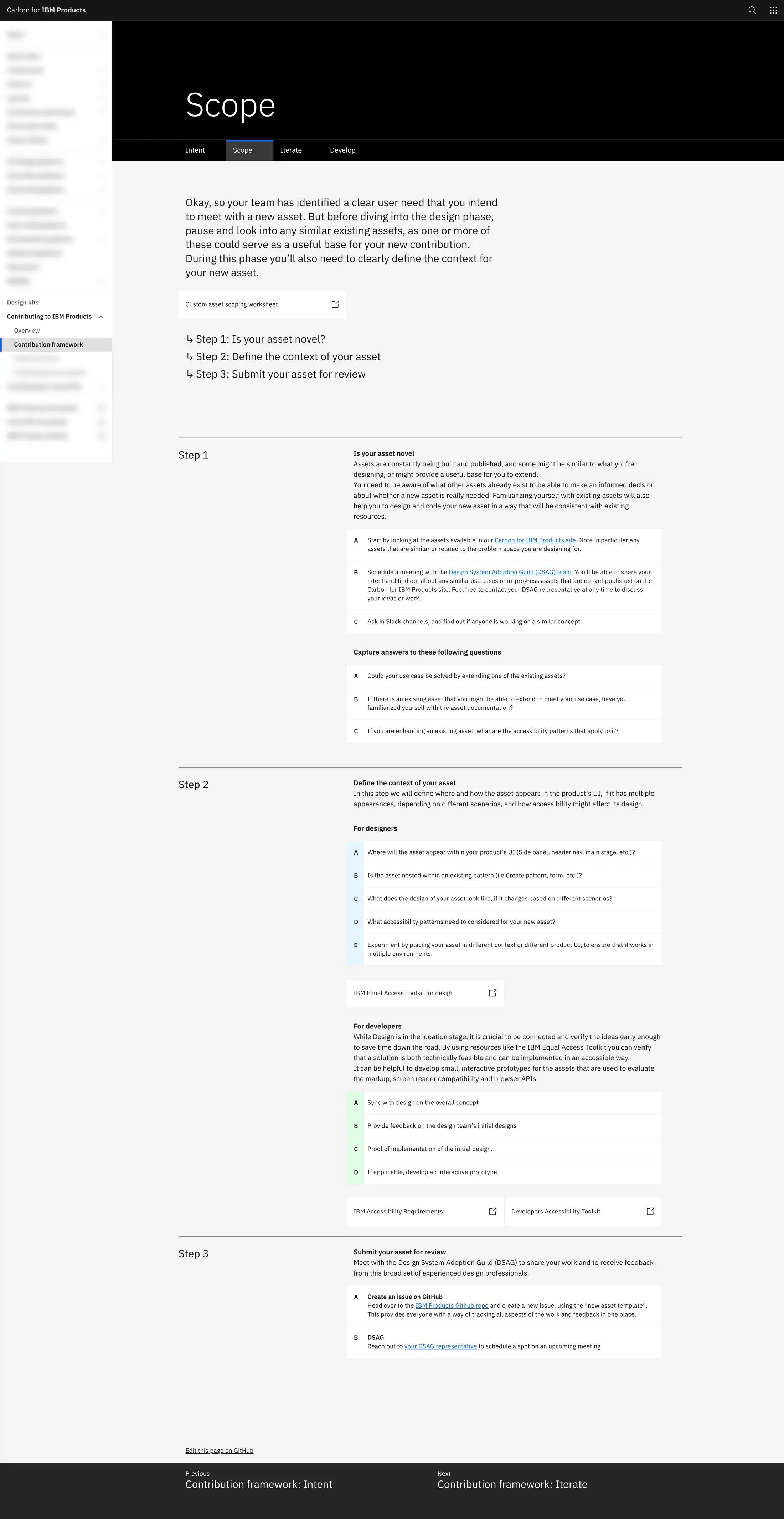
The IBM Products guide for custom
Carbon assets
Defined the framework
Translated research into a shared process connecting product needs, design, development, and contribution, clarifying team responsibilities.
Estimated less overhead, through clearer guidance and easier discovery
Resolved fragmented workflows
Compared approaches across organizations,
identified gaps in the contribution journey,
and brought designers and developers
around a shared process.
A recognition path from contribution
to career growth
Tied contribution to growth
Worked with IBM's badge committee to define
how meaningful contributions could be formally
recognized and linked to professional
development.
Kick off
Starting from our
own pain point
This was a self-initiated project. I invited two colleagues to join me in exploring potential challenges we could tackle together. Through brainstorming, voting, and feedback from our leads, we identified a challenge we faced ourselves: teams lacked a clear process for creating custom Carbon assets from the ground up.
Creating a custom Carbon asset involves more than design and development. Teams bring their proposed components through design and governance reviews, where stakeholders assess technical feasibility, standards, and accessibility,
providing feedback and approvals at different stages of the process.
Research
Understanding how teams create custom Carbon assets
To create guidance that would meet product team needs, I interviewed designers and developers across IBM’s organizations to understand how they approached custom Carbon assets creation. This research revealed their challenges, mental models, and opportunities, and helped define what an aligned guide needed to support.
Interview teams
Interviewed 15+ designers and developers from different product teams to understand their goals, workflows, and pain points.
Explore the ecosystem
Compared how teams across IBM Products, the Design Program Office, and Cloud approach custom assets, contribution, and reuse.
Synthesize insights
Captured key themes from interviews and the workshop, turning them into needs and opportunities.
Validate direction
Created a storyboard of the proposed guide and gathered feedback from designers and developers.
What we heard

Why teams build custom assets
“People’s primary goal is not to contribute a pattern. It’s to get something that they need in that product.”

When alignment takes too long
“By the time you’ve got consensus from across IBM, your developer has already built and shipped the thing that you needed for your release.”

Finding what already exists
“No awareness that there
is a library that has those components.”

Designing beyond one product
“This design I’ve made works for my context, my product. How’s it going to work for other contexts and other products?”

Who does what
“Who’s taking care of what, the timelines, the expectations — that is just nowhere.”
Key findings
What we learned
The research revealed five key insights that shaped the direction of the work, expanding
the focus from creating custom assets to sharing and reusing them across IBM Products.
Contribution wasn't part of the conversation
Teams were focused on their immediate product needs.
This revealed
a bigger opportunity: beyond making
asset creation easier,
we needed to shift the
mindset around contribution itself—
bringing
it into consideration before creation began.
The process was both organizational and technical
Creating a custom asset required navigating Carbon's standards, tooling, governance, and technical decisions, with information distributed across teams in different organizations.
Knowing what to build was only part of the challenge
Teams often solved similar problems independently. Even when an existing solution could be found, it was often tailored to the needs of a specific product, with limited visibility across the organization.
Making contribution
valuable to individuals
Designers and developers focused on meeting product needs. The organization lacked a clear path to recognize this work and develop
the skills gained through creating
and sharing reusable assets.
No shared understanding of the workflow
The process spanned multiple teams and disciplines, but there was no shared understanding of each role’s responsibilities, the sequence of tasks, or who needed to do what and when.
Define a shared workflow clarifying design and development tasks, sequence, and handoffs.
From findings to direction
From research to a contribution framework
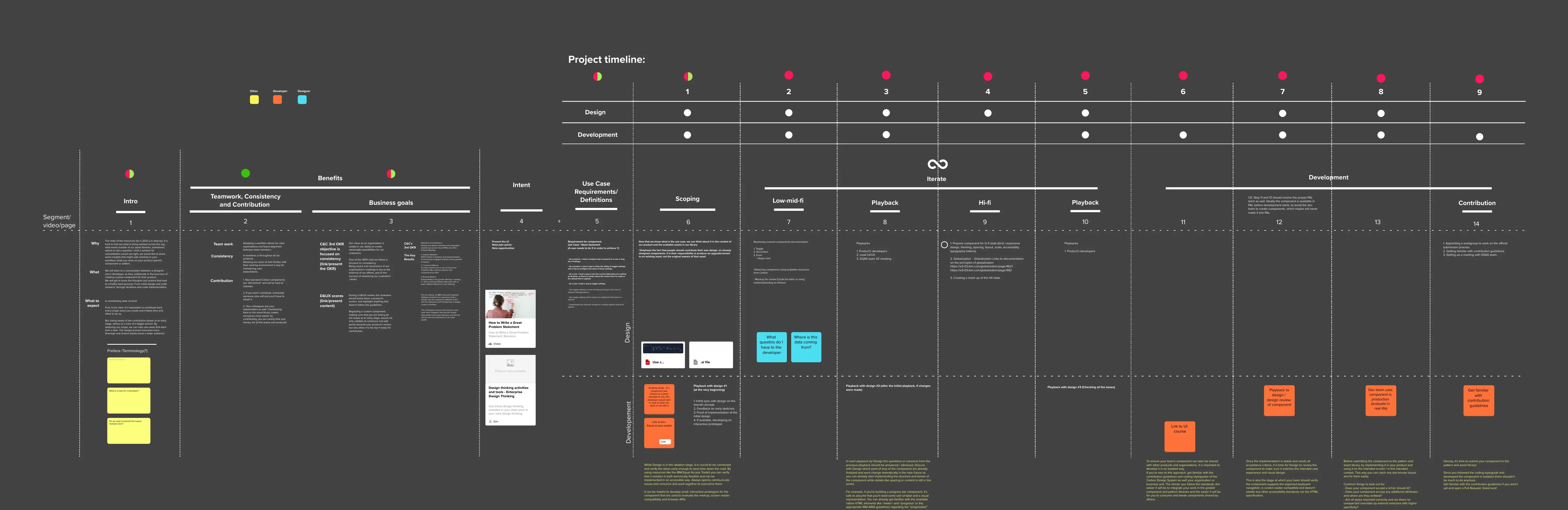
We mapped the contribution journey in Mural, from identifying an opportunity through design, development, and contribution. I sketched a storyboard and used it to test the proposed framework in a workshop with designers and developers, exploring how it would work in practice. Their feedback helped refine the framework and shape the final experience.
The storyboard in Mural: the contribution journey, from intent through design, development, and contribution.
Storyboard